Custom Metal Stamping: Getting Steel Parts Right First Time
Why do two suppliers quote the same drawing and deliver parts that behave completely differently on site? One batch of brackets drops straight onto the strut channel. The other needs reaming, shimming and a site crew asking questions you cannot answer from your office.
The difference rarely sits in the steel itself. It sits in how the supplier plans the tooling, controls tolerance and sequences finishing. This guide explains how custom metal stamping works, what drives its cost, and what to check before you place an OEM order for stamped steel parts.
What Is Custom Metal Stamping?
Custom metal stamping is a cold forming process that uses a press and a purpose built die to cut and shape flat sheet or strip steel into a part made to your drawing. Typical operations include blanking, piercing, bending and forming. Once the tooling is approved, every part comes off the press with the same geometry.
That repeatability is the main reason buyers choose stamping over laser cutting or machining. For construction hardware, MEP supports and precast accessories, consistent hole positions and bend angles mean faster installation and fewer rejections at the job site.
Core Operations in Metal Stamping Services
Most stamped steel parts combine several operations, either in one die or across several press stations.
| Operation | What it does | Typical use in construction hardware |
|---|---|---|
| Blanking | Cuts the outer profile from sheet or strip | Flat plate fittings, base plates, washers |
| Piercing | Punches holes and slots | Bolt holes in fittings, slotted brackets |
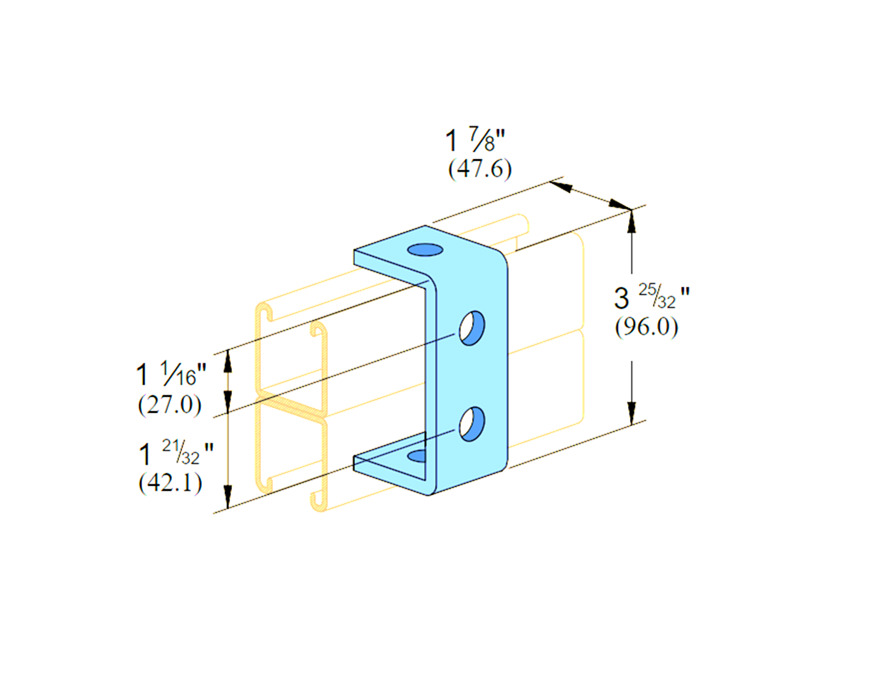
| Bending | Forms angles along a straight line | Angle fittings, U and Z shape fittings |
| Forming | Creates deeper or compound shapes | Channel brackets, post bases |
| Embossing and coining | Adds stiffening ribs or marks | Reinforcement ribs, part numbers |
| Logo marking | Stamps brand or batch identification | Traceability for distributors |
The more operations a part needs, the more the tooling plan matters. Combining them well reduces handling, which reduces cost and dimensional variation.
Progressive, Compound or Single Station Dies: Which Fits Your Volume?
Tooling is the largest upfront decision in custom metal stamping. The right die type depends on annual volume, part complexity and how stable your design is.
| Die type | How it works | Best for | Trade off |
|---|---|---|---|
| Single station | One operation per press stroke, parts moved between dies | Low volumes, prototypes, designs still changing | Lower tooling cost, higher cost per piece |
| Compound die | Several cutting operations in one stroke at one station | Flat parts needing tight hole to edge accuracy | Good flatness, limited forming |
| Progressive die | Strip feeds through a series of stations, finished part at the end | High, repeat volumes of the same part | Highest tooling cost, lowest cost per piece |
A practical rule: if your design may still change, or you order a few thousand pieces a year, start with simpler tooling. Move to a progressive die once the drawing is frozen and volumes justify it.
Planning a new OEM part? Send PCJ your drawing and expected annual volume, and our engineers will recommend a tooling route before quoting.
Materials and Finishes for Steel Stamping Parts
Material and finish decide whether a stamped part survives its service life. They also affect how the part should be designed.
Common materials:
- Hot rolled steel for thicker structural fittings and base plates
- Cold rolled steel for better surface finish and tighter thickness control
- Pregalvanized steel for indoor MEP components where cut edges are acceptable
- Stainless steel for corrosive or hygienic environments
Common finishes:
- Electro galvanizing for a thin, bright coating on indoor parts
- Hot dip galvanizing for outdoor and structural use, typically specified to ASTM A123, ISO 1461 or AS/NZS 4680
- Powder coating where colour or extra protection is required
One detail buyers often miss: hot dip galvanizing adds coating thickness inside holes and on threads. Hole sizes and clearances should be set with galvanizing in mind, not only the bare steel dimension. Good suppliers raise this at the drawing review stage, before any tool is cut. Our guide on surface preparation before galvanizing covers this in more depth.
Where Custom Metal Stampings Are Used
In construction and infrastructure, custom metal stampings appear in almost every system that needs fixing, supporting or connecting.
- MEP support systems: U and Z shape fittings, flat plate fittings, angle fittings, channel brackets and square post bases for strut frameworks
- Precast concrete: connection plates, angle brackets and flat lifting anchors
- Concrete reinforcement: dowel cradles and bar supports that hold steel in position during pouring
- Fencing and barriers: tension bands and brace bands that secure rails and wires to posts
- Pre engineered buildings and solar structures: gusset plates, connection plates and bracket components
Each of these parts is small, but each one sits on a critical path. A bracket with a misplaced hole can stop an entire ceiling installation.
What Drives the Cost of Custom Metal Stamping?
Do not judge a quote on the price per piece alone. The real cost of a stamped part is built from several factors.
- Tooling: die design and manufacturing, amortized over your expected volume
- Material: steel grade, thickness and how efficiently parts nest on the strip
- Part complexity: number of operations, bends and features
- Tolerance: tighter tolerances need more precise tooling and more inspection
- Secondary operations: welding, thread rolling, tapping or assembly after stamping
- Finish: galvanizing or coating, charged by weight or surface area
- Packaging and freight: export packing, palletizing and shipping to your port
Two levers usually save more than negotiating the unit price. First, open tolerances that do not affect function. Second, consolidate similar parts so one die can produce several variants. A supplier that suggests these changes is helping you, not complicating the order.
Want a cost review of an existing part? Share the drawing and your current price, and PCJ will show where tooling or design changes could reduce it.
How to Choose a Custom Metal Stamping Manufacturer
For international buyers, the right partner is the one that delivers consistent parts across repeat orders, not just a good first sample. Ask these questions before you commit.
- Drawing review: Will the engineering team check your drawing for manufacturability and flag issues before tooling?
- Tooling ownership: Who owns the die, and can it be transferred if needed?
- In house processes: Are cutting, stamping, welding, thread rolling and galvanizing coordinated under one roof, or spread across subcontractors?
- Quality control: Is there first article inspection and batch inspection against your drawing, with records you can see?
- Standards: Can the supplier work to the standards your market requires, such as AS/NZS 4680 for Australia or ISO 1461 for Europe?
- Export experience: Does the team understand export packaging, documentation and shipping to your country?
Our quality inspection checklist for export steel sets out what a complete inspection record should contain.
Custom Metal Stamping at PCJ: From Drawing to Shipment
PCJ Steel Processing manufactures OEM steel components strictly to customer drawings, technical specifications and international standards. Stamping is one stage in a controlled production flow, so every part reaches you finished, inspected and ready to install.
- Raw material: steel sourced and checked against the specified grade
- Cutting: sheet and strip cut to blank size
- Drilling and chamfering: secondary hole work where required
- Stamping, pressing and bending: forming to the approved drawing
- Lathing and milling: machining of precision features
- Welding and thread rolling: for assemblies and threaded components
- Logo marking: customer brand or batch identification
- Surface treatment: electro galvanizing, hot dip galvanizing, powder coating, plain, pregalvanized or stainless
- Testing and QC inspection: dimensional and coating checks against your requirements
- Packaging and delivery: export packing and shipment to your port
Fabrication and finishing are coordinated in one flow, you deal with one supplier and one point of accountability, from drawing review to the container door.
Frequently Asked Questions About Custom Metal Stamping
What information do I need to send for a custom metal stamping quote? Send your drawing in PDF plus DXF or STEP, the steel grade and thickness, the surface finish, the quantity per order and your expected annual volume.
Can I get samples before mass production? Yes. PCJ can produce samples for approval before full production, so you can check fit and finish on your own system.
What is the minimum order quantity? [VERIFY: typical MOQ for OEM stamping orders]. MOQ depends on the tooling route, and simpler tooling allows smaller first orders.
How long does production take? [VERIFY: typical lead time for tooling and for production]. Lead time depends on die complexity, finish and order size.
Can stamped parts be hot dip galvanized to Australian or European standards? Yes. Parts can be finished to ASTM A123, ISO 1461 or AS/NZS 4680, as specified in your order.
Conclusion
Good custom metal stamping starts long before the press runs. It starts with a drawing review, a tooling route matched to your volume, and a finish specified for where the part will live. Get those right, and every repeat order arrives the same as the first.
If you are sourcing MEP fittings, precast connection plates or any stamped steel component to your own design, send your drawing to PCJ Steel Processing. Our engineering team will review it, recommend the right tooling route and return a detailed quotation.
Request a quote for your custom stamped parts today.
Contact PCJ Steel Processing
PCJ Steel Processing Co., Ltd.
Address: No. 17 Street 9, Van Phuc Urban Area, Hiep Binh Ward, Ho Chi Minh City, Vietnam
Tel: +84 28 3620 1768
- What is OEM? Meaning, Process and OEM vs ODM
- Structural Steel Fabrication | Standards-Compliant Manufacturing for Global Projects
- Steel Processing Company | What Services to Expect and How PCJ Delivers
- Why Australia Imports Steel Fabrication from Asia: Cost, Capacity, and Supply Chain Logic
- Steel Connection Plate Fabrication | Gusset & Base Plates – PCJ Vietnam