As industrial supply chains evolve, buyers are becoming more selective about the companies they work with. Product quality still matters. Delivery still matters. Price still matters. But in many B2B sectors, those factors are no longer enough on their own.
Today, businesses also want to know how a supplier operates, what values shape its decisions, and whether its growth model is sustainable.
This is why sustainable steel fabrication is gaining more attention. It reflects a broader change in the market: steel companies are expected not only to manufacture, but to manufacture with greater awareness.
For PCJ FABRICATION, this creates an opportunity to define steel processing in a more modern way.
A Changing Standard in B2B Manufacturing
The traditional image of fabrication is often built around machines, sparks, cutting, welding, and output. That image is still true, but incomplete. Modern fabrication companies are also expected to improve workflow efficiency, control waste, and think carefully about resource use.
In practice, that means responsible steel processing is becoming a meaningful part of how companies present themselves to the market.
B2B customers increasingly appreciate suppliers that:
- understand long-term operational value
- care about process discipline
- reduce unnecessary rework
- think beyond short-term production volume
These qualities suggest maturity. They also help purchasing teams evaluate supplier fit more confidently.
What Sustainable Steel Fabrication Really Means
For industrial buyers, sustainability should not be reduced to vague language. It should be connected to real operational thinking.
In a fabrication context, sustainability often includes:
- better material planning
- more efficient cutting and usage
- reduced scrap where possible
- process improvements that limit waste
- quality control that lowers rejection and rework
- a workplace culture that values order, cleanliness, and responsibility
This is where efficient steel production becomes closely linked to environmental thinking. When production is planned carefully, the company often saves time, reduces waste, and improves consistency at the same time.
That makes sustainability both a business issue and an environmental one.
Small Improvements Can Create Long-Term Value
Many important changes do not begin with large public campaigns. They begin with daily decisions inside the production environment.
For example:
- using materials more accurately
- improving coordination between teams
- reducing handling mistakes
- reviewing fabrication steps to improve yield
- promoting awareness of cleaner operations
These are practical signs of a green manufacturing mindset. They show that environmental care can grow from disciplined industrial practice.
Why the Steel-to-Green Story Matters
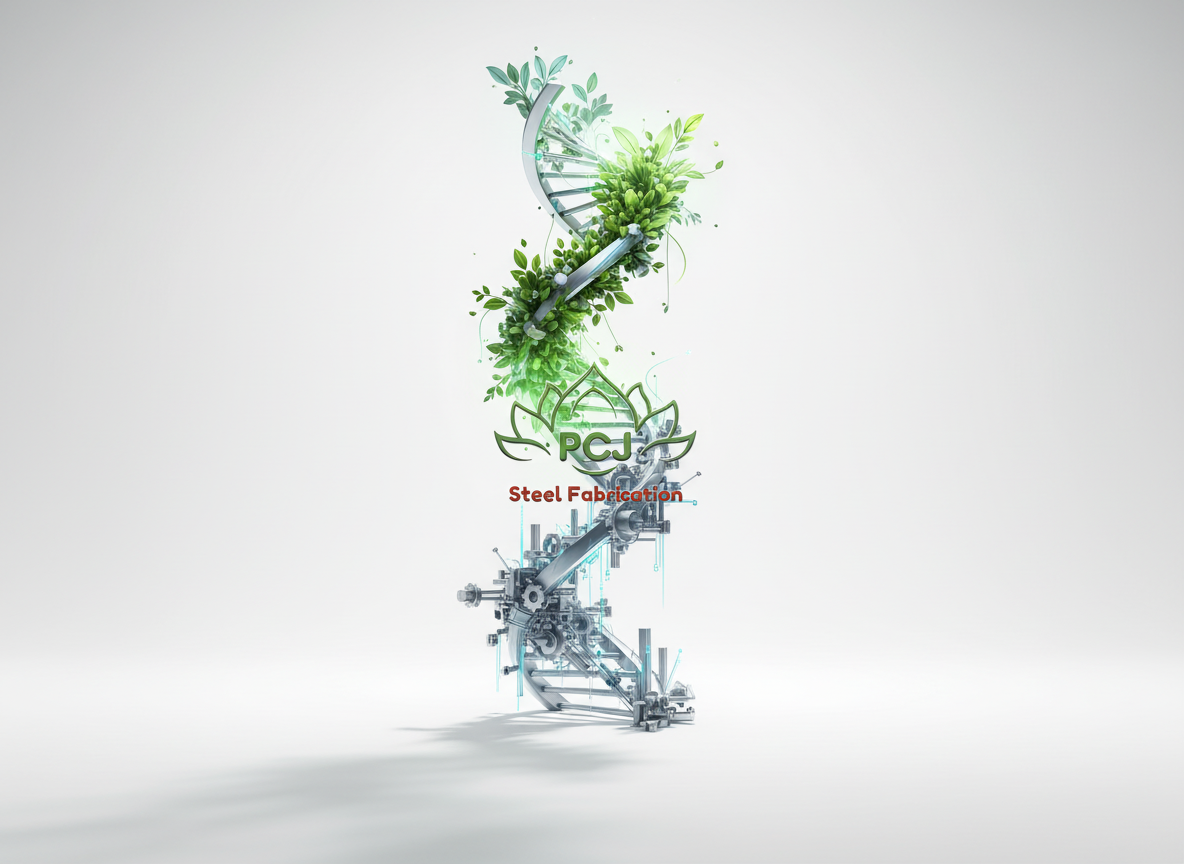
PCJ FABRICATION has a strong brand concept available to it: the journey from steel to green.
This message works because it turns an industrial topic into a more memorable and meaningful business story. Steel stands for reliability, strength, and engineered value. Green stands for life, renewal, and responsibility toward the future.
For a fabrication company, linking these ideas is powerful. It tells customers that the business understands both the realities of industry and the importance of sustainable direction.
That message can be especially useful in content marketing because it creates brand distinction without sounding overly promotional.
Environmental Awareness as Part of Brand Identity
In B2B markets, trust is often built gradually. It comes from consistency, useful communication, and a clear market identity.
A company that talks about sustainability in a realistic and grounded way can make a stronger impression than one that uses generic claims. That is why environmentally conscious manufacturing should be communicated through practical language.
PCJ FABRICATION can build this identity by emphasizing:
- professional fabrication capability
- process responsibility
- efficient material use
- long-term partnership value
- a visible respect for greener industrial development
This positioning helps the brand appeal to buyers who want reliable suppliers and responsible business partners.
Sustainability Supports Better Decision-Making
For customers, working with a supplier that values efficiency and waste awareness can support better decisions in several ways:
- it suggests stronger process control
- it points to lower risk of avoidable errors
- it shows a long-term operational mindset
- it aligns with ESG-related conversations in procurement and sourcing
Even when sustainability is not the main purchase driver, it still influences how buyers perceive credibility.
Where PCJ FABRICATION Can Add Market Value
As a steel fabrication company, PCJ FABRICATION is well placed to communicate a balanced message: industrial performance with environmental awareness.
That matters because many buyers do not want empty branding. They want evidence of serious thinking. They want to see whether a company understands the pressures of project execution while also recognizing the broader expectations around responsible manufacturing.
By highlighting its fabrication direction through this lens, PCJ FABRICATION can support better market recognition and stronger trust.
Conclusion
The future of fabrication will not be shaped by capacity alone. It will also be shaped by how companies think, how they organize production, and how they respond to environmental expectations.
PCJ FABRICATION has the opportunity to show that steel processing can be both effective and responsible.
By connecting sustainable fabrication solutions with a real-world industrial mindset, the company can present a message that is relevant to modern B2B buyers: make strong products, run smart operations, and build with the future in mind.
FAQ
- What is sustainable steel fabrication?
Sustainable steel fabrication refers to production practices that improve efficiency, reduce waste, and support more responsible use of materials and resources.
- How does sustainability help B2B customers?
It can support better quality control, lower unnecessary waste, stronger process discipline, and a more reliable long-term supplier relationship.
- Is sustainable fabrication only about environmental image?
No. It also relates to operational efficiency, reduced rework, smarter planning, and more disciplined manufacturing.
- Why do buyers care about responsible steel processing?
Because it can reflect better internal management, improved consistency, and a more future-ready approach to industrial supply.
- How can PCJ FABRICATION communicate its environmental values?
By linking its fabrication services with practical sustainability actions, efficient production principles, and a clear steel-to-green brand story.
Contact us for project support
If your business is looking for a fabrication partner that values both industrial performance and responsible growth, connect with PCJ FABRICATION to explore your requirements.
- Why Australia Imports Steel Fabrication from Asia: Cost, Capacity, and Supply Chain Logic
- AS/NZS Requirements for Fabricated Steel: What Buyers Should Ask Before Ordering
- Steel Demand in Indonesia Construction Market: What Exporters and Buyers Should Watch
- Export Process from Vietnam to Australia: A Practical Guide for Fabricated Steel Suppliers
- Steel Testing & Inspection Methods | Fabrication QC Guide – PCJ Steel